This short post is exactly what it seems: a showcase of all ggplot2 themes available within the ggplot2 package. I was doing such a list for myself (you know that feeling …”how would it look like with this theme? let’s try this one…”) and at the end I thought it could have be useful for my readers. At least this post will save you the time of trying all different themes just to have a sense of how they look like.
Enjoy!
theme_bw()
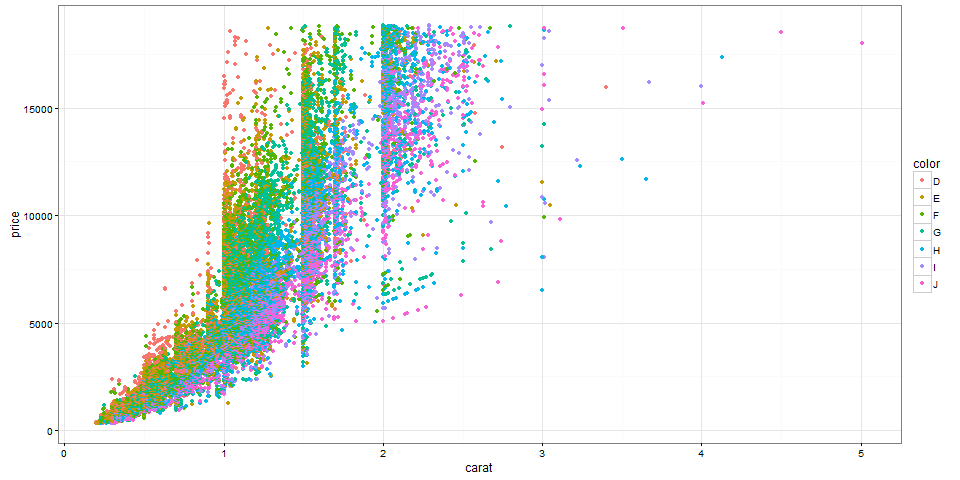
theme_classic()
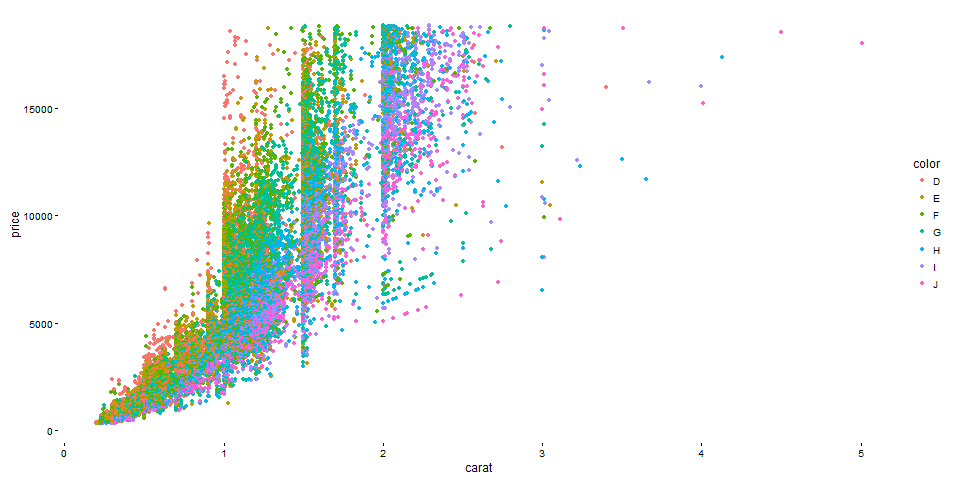
theme_dark()
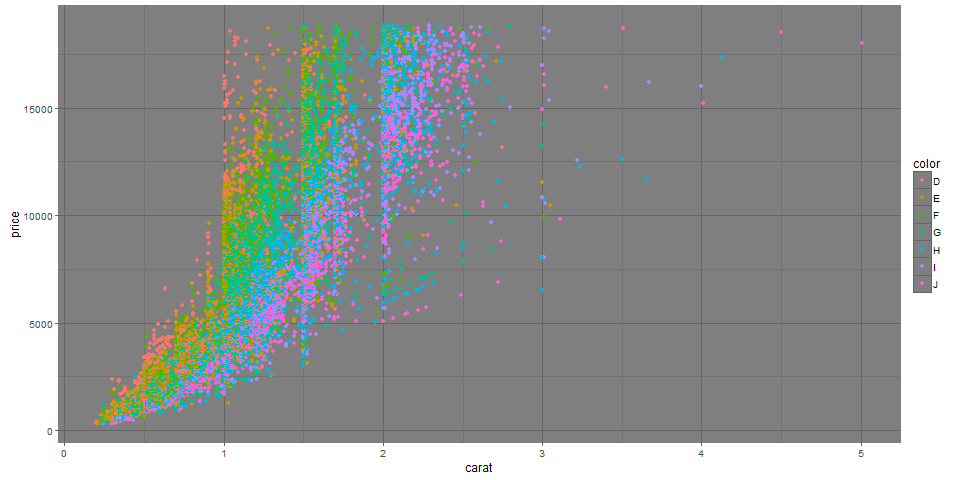
theme_gray()
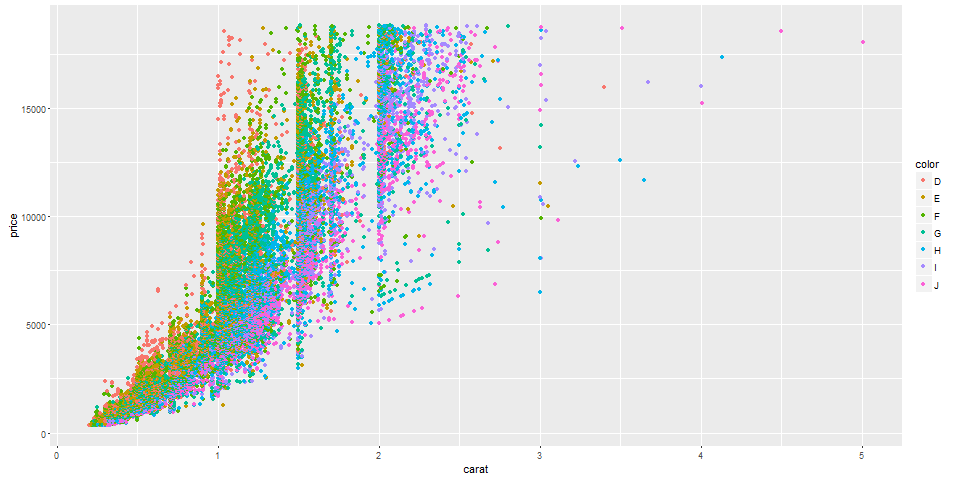
theme_grey()
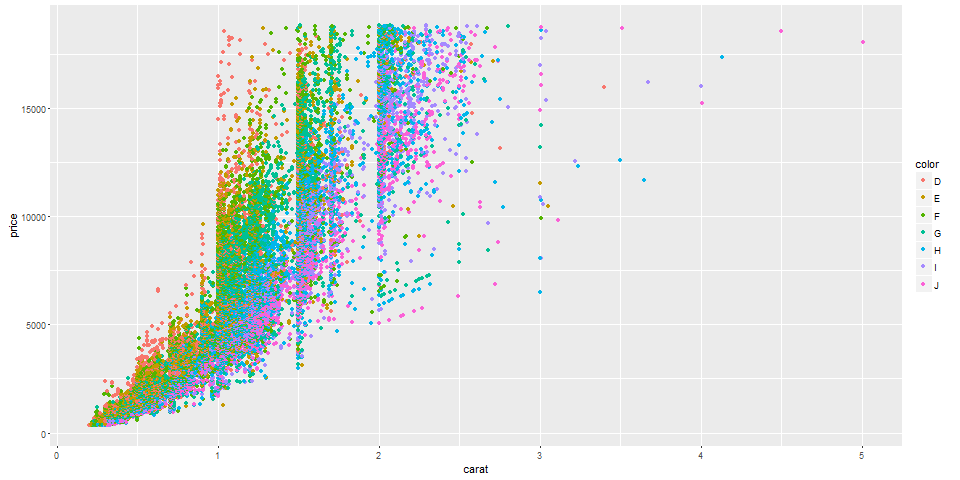
theme_light()

theme_linedraw()
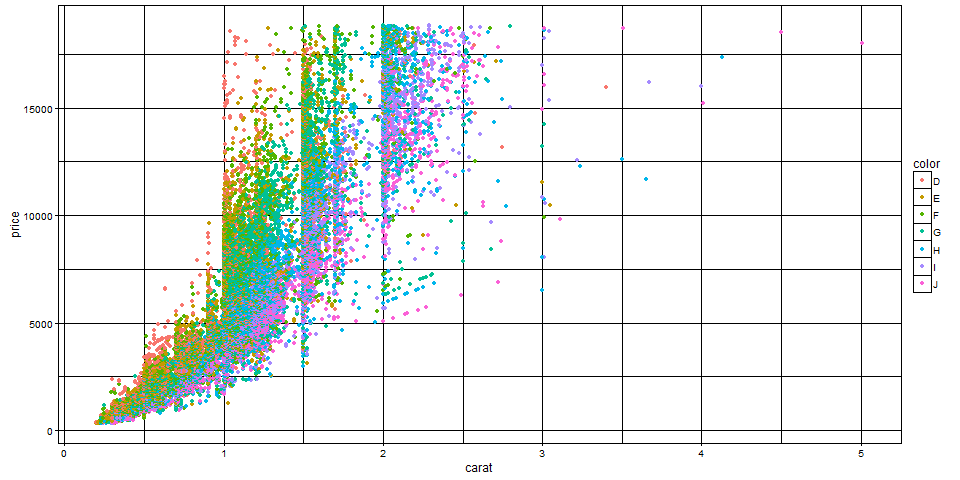
theme_minimal()

Bonus Track: The Code
Since copy and pasting and right-clicking 9 times to produce all the plots was definitely not acceptable, I wrote a small function to dynamically create and save a png file with different name and content. thank to Marcin Kosiński for the contribution (see comments)
library(dplyr)
library(ggplot2)

create_file_and_plot = function(name){
  path = paste(getwd(),"/",name,".png",sep = '') %>%
         file.path() %>%
         png(,width=960,height=480)
         eval(parse(text=paste0("print(ggplot(data=diamonds, aes(carat,price ))+ geom_point(aes(colour=  color))+", name,"())")))
  dev.off()
}

sapply(c("theme_bw", "theme_dark"), create_file_and_plot)
Final notes
Inner ggplot2 structure allows for a nearly infinite number of customizations and extensions.You can have a sense of what I am talking about looking at ggplot2 extensions website or to the ggthemes package vignette by the package author Jeffrey B. Arnold.


Do you use jekyll or wordpress for your blog?
wordpress at the moment (independent theme), but I am working on the migration to an rmarkdown based site to streamline workflow from analyses to posting.
I also think that this operation might be done in one function call – so that you don’t have to change the `template` every time
“`
library(ggplot2)
library(dplyr)
create_file_and_plot = function(name){
paste(getwd(),”/”,name,”.png”,sep = ”) %>%
file.path() %>%
png(,width=960,height=480)
eval(parse(text=paste0(“print(ggplot(data=diamonds, aes(carat,price ))+ geom_point(aes(colour= color))+”, name,”())”)))
dev.off()
}
sapply(c(“theme_bw”, “theme_dark”), create_file_and_plot)
“`
that’s why I love r folks! Just updated the post aligning it with your proposal. thank you.
I wonder if this update also appears on R-bloggers : ) ?
based on previous experience I think no.
Shouldnt there be ‘name’ instead of ‘path’ in ‘create_file’?
actually not, wordpress was messing things up, now should be fixed. Unfortunately, I had to subtsitute our beloved ‘<-' with that a sad '=' to make it display things properly.
Thank you for pointing this out!
theme_get() is not a theme, it returns the current theme settings… you might like to try example(theme_bw) for another way to see all the standard themes.
thank you kent for your useful comment, just updated the post. About example() it is actually a nice feature, what I was trying to produce here was a quick visual reference. thank you again.